2026 IT Trends: What Executives Need to Know
February 10, 2026
Blog Posts

The line between Ops and IT is becoming harder to define. As organizations scale and optimize resources, Operations teams are increasingly at the center of company-wide technology decisions — especially in businesses with fewer than 1,000 employees.
Alongside strategic priorities, many Ops teams are tasked with ensuring employees have the tools, access, and systems they need to do their jobs. In 2026, this shift will only accelerate, placing Operations at the heart of IT efficiency, cost control, and risk management.
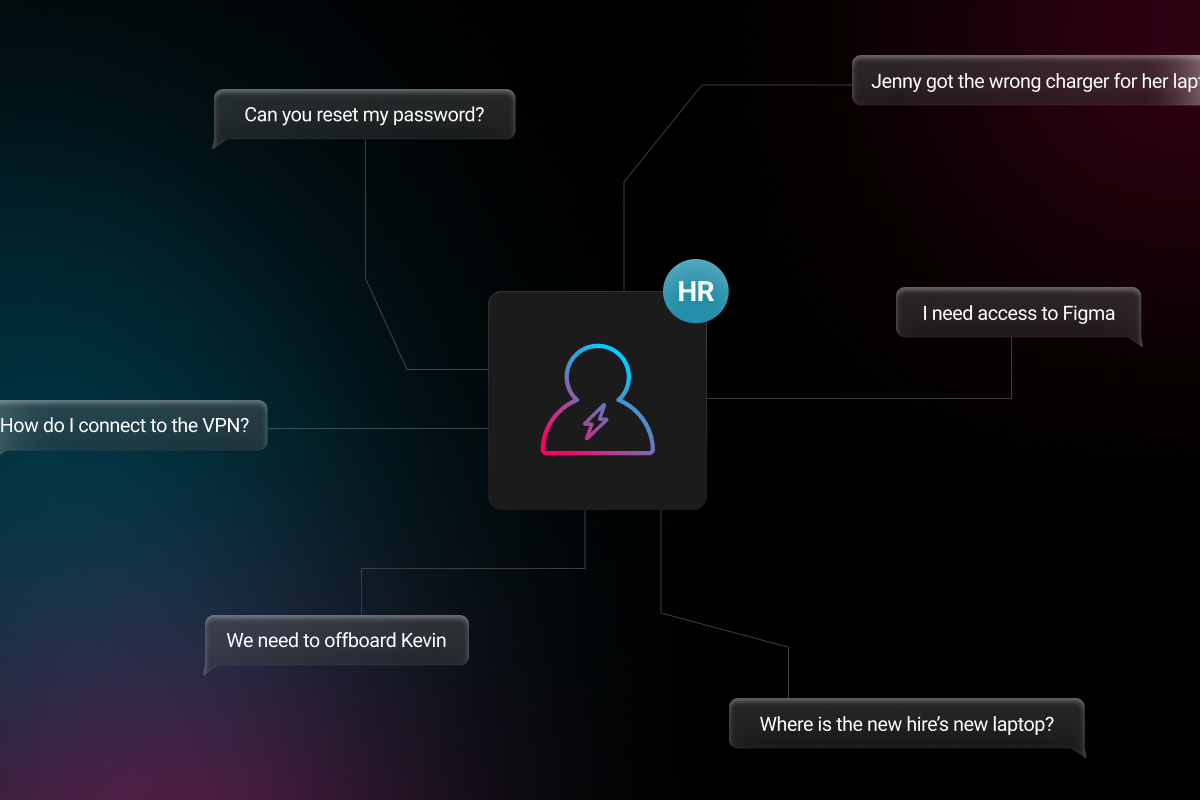
In fast-growing businesses, IT is no longer a standalone function. For many Operations teams, technical responsibilities are now embedded in everyday tasks:
Operations teams may not have the resources or expertise to own these responsibilities, yet they often become the de facto point of contact in organizations that don’t have a dedicated IT department. Without the right systems and solutions in place, Ops can become trapped in reactive troubleshooting and administrative work that distracts from high-impact initiatives.

COO of mBiota, Victoria Lamberti was wasting 5–10 hours per week chasing down tickets and troubleshooting IT. Explore how she reclaimed her time, simplified onboarding, and cut IT costs by 70%.
Read case study >As technical workloads continue to grow, several key trends will shape how Operations teams manage IT responsibilities in the year ahead.
Dedicated IT departments are now a rarity in businesses with fewer than 1,000 employees. In 2026, Ops teams will increasingly take ownership of device provisioning, access permissions, and tech stack reliability. Expect a transition away from ticketing systems in favor of standardized workflows.
Manual onboarding and offboarding are a recipe for delays, errors, and security gaps, especially when performed at scale. Automated workflows will allow Ops teams to provision access, apps, and devices quickly and consistently in 2026, improving the employee experience while freeing up time for strategic work.
Managing dozens of vendors, integrations, and licenses drains valuable time and budget. In 2026, Ops teams will replace fragmented tools with centralized platforms and a consolidated tech stack, eliminating duplication, cutting costs, and reducing operational burden.
Access controls, device management, and employee offboarding are critical risk points for growing businesses. Ops will take the lead on strengthening organizational defenses in 2026, enforcing security through process and automation — not manual oversight.
As more AI-powered tools are adopted across teams, Ops will play a key role in defining guardrails, permissions, and usage standards across the business to prevent sensitive data from being exposed or misused.
To avoid reactive IT work, Operations leaders need to take an intentional approach to managing technology in 2026:
Operations teams will play a central role in optimizing IT in 2026. Manual processes and fragmented tools limit scalability, increase risk, and pull Ops away from their core mandate: keeping the business running efficiently. To overcome these challenges, Ops teams must prioritize automation, consolidation, and security — not by becoming IT experts, but by implementing systems that reduce friction and prevent issues before they arise.
Book a demo of Electric today to learn how your organization can centralize and simplify IT management!

Jessica Farrelly
Jessica is a content writer with more than 10 years of experience covering SaaS and the tech industry. She has worked with both B2B and B2C publications across North America, Europe, and APAC and currently writes about IT Solutions or Electric.